Commercial Insurance for Guadalupe County Farms: What Harvest Season Actually Requires
Compare ag-specific coverage against general business policies to protect your harvest machinery
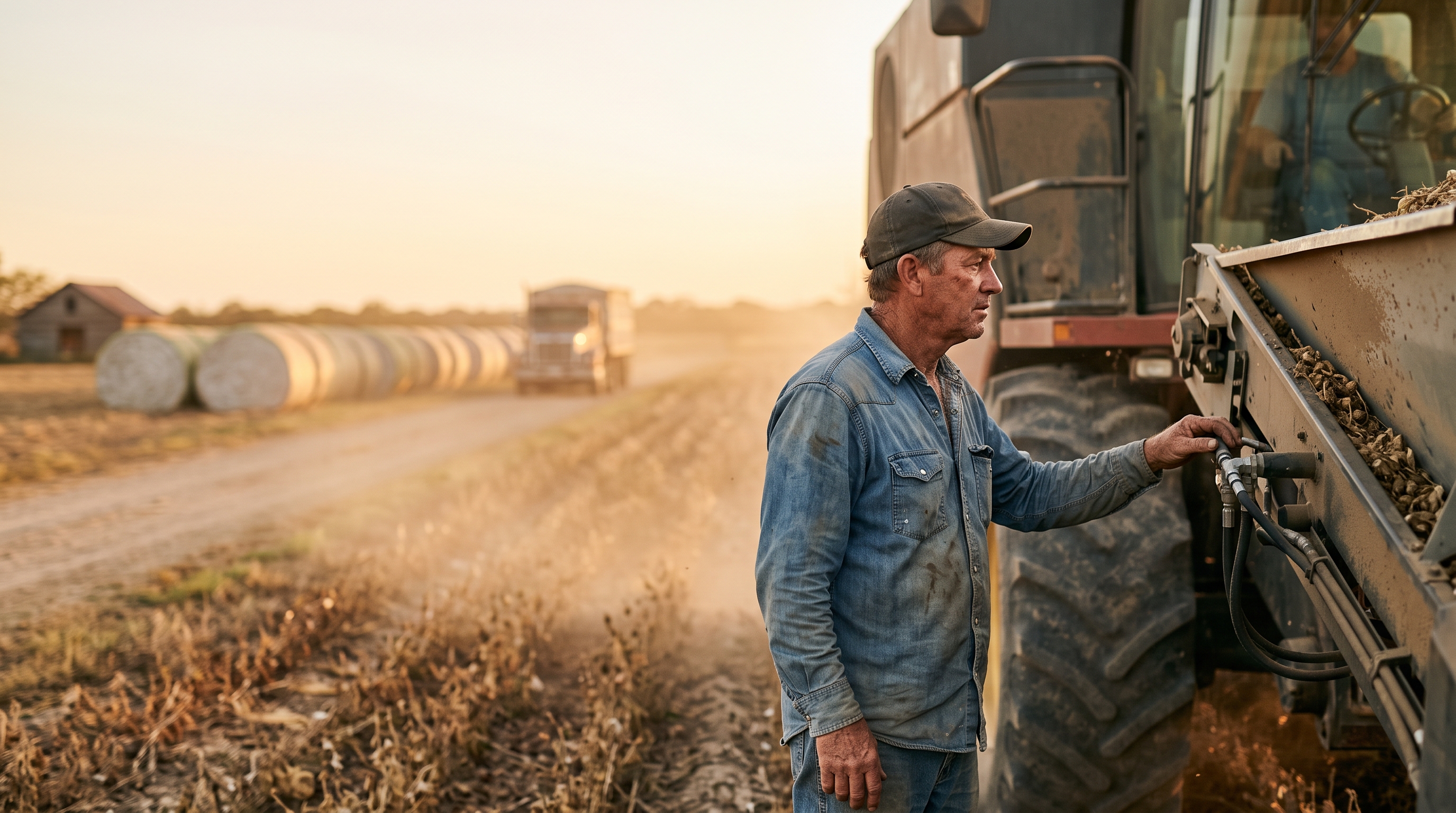
Harvest season starts in September, and with it comes a specific set of risks that standard business policies often miss. If you run a farm or ag operation in Guadalupe County, the question isn't whether you need commercial insurance. It's whether your current policy covers the machinery, the labor, and the liability that spikes when the fields are working at full capacity.
This guide breaks down the decision points that matter most when you're evaluating your coverage ahead of a busy season. It is written for farm owners, equipment operators, and ag business managers in the Seguin and Guadalupe County area who need to know what to check before the first truck loads up.
The Decision: Do You Have Ag-Specific Coverage, or Just General Business Insurance?
Many small farms in Guadalupe County carry a general commercial policy that was set up when the operation was smaller or less mechanized. That policy may cover a barn or an office, but it often does not account for the specific risks of active harvest work.
The first decision is simple: does your policy explicitly cover agricultural operations? If you are growing, harvesting, or processing crops, you need a policy that recognizes that activity. General business insurance is designed for offices, retail, and service businesses. It is not built for the reality of a combine running at dawn, a crew working in the field, and trucks hauling product to a local buyer.
If your current policy does not list your agricultural activity as a covered operation, you have a gap. That gap is not a minor technicality. If a claim arises from a harvest activity your policy does not recognize, the carrier can deny it. The decision here is not about adding a rider. It is about confirming that the core policy is structured for what you actually do.
Cost: What Harvest Season Adds to Your Premium
Harvest season changes your risk profile, and your insurance should reflect that. When you are operating heavy equipment, employing seasonal labor, and transporting goods, your exposure is higher than in the off-season.
The cost decision comes down to two questions. First, does your current policy adjust for seasonal activity? Some policies have a flat annual rate that does not account for the increased risk during harvest months. Others allow you to add seasonal endorsements that cover the specific equipment and labor you use only during peak season.
Second, are you insuring the right assets? A combine, a grain cart, a sprayer, and a fleet of trucks each represent different levels of risk. Insuring a $300,000 combine under a general property policy that was priced for a $50,000 barn is a mismatch. The premium may seem reasonable, but the coverage limit may not be.
The practical move is to list every piece of equipment you use during harvest, every employee or contractor on site, and every route your trucks take. Then compare that list against what your current policy actually insures. If the numbers do not line up, you are paying for a policy that does not match your operation.
Timeline: Why You Should Not Wait Until October
The second decision is when to make these changes. Harvest season in Guadalupe County ramps up in September. By the time the first crop is ready for harvest, the window to adjust your coverage is narrowing.
Insurance policies are not instant. If you need to add a new endorsement, increase a liability limit, or switch carriers, the process takes time. You need to request quotes, compare terms, and bind coverage before the risk begins. If you wait until a piece of equipment breaks or a worker is injured, you are negotiating from a position of urgency, and the terms you get will not be as good as the terms you would have gotten in August.
The decision here is not about being paranoid. It is about being practical. The cost of a claim that is denied because you did not update your policy in time is far higher than the cost of a few hours spent reviewing your coverage in September.
Fit: Independent Agency vs. Single-Carrier Agent
The third decision is who you ask for help. In Guadalupe County, you have two main options: a captive agent who sells one carrier's products, or an independent agency that works with multiple carriers.
A captive agent can only offer you the products from one company. If that company does not have a good fit for your specific ag operation, you are stuck. You will either accept a policy that does not fully cover your needs or go without.
An independent agency, like WKI Insurance in Seguin, works with multiple carriers. That means the agent can shop your specific risk across several companies and find the policy that fits your operation at a price that makes sense. For a farm with a mix of equipment, seasonal labor, and crop types, that flexibility matters. You are not locked into one carrier's product line. You are getting a recommendation based on your actual needs, not on what one company happens to sell.
This is not a judgment on captive agents. Some are good at what they do. But if your operation is complex enough that one carrier's standard policy does not fit, an independent agency gives you options.
Verdict: Who Should Do What
If you run a farm or ag business in Guadalupe County and your current policy was set up before you expanded your harvest operations, you should review your coverage now, in September, before the season peaks. Confirm that your policy lists your agricultural activity as a covered operation. Confirm that your equipment, labor, and liability limits match what you actually use during harvest.
If you are a new farm or have recently added significant equipment, do not assume your existing policy covers the new activity. Ask for a written confirmation that your specific harvest operations are covered.
If you are currently with a single-carrier agent and your operation is complex, consider getting a second opinion from an independent agency. There is no cost to ask. The worst that happens is you confirm your current coverage is fine. The best that happens is you find a policy that actually fits.
What to Do Next
- List every piece of equipment you use during harvest, including combines, tractors, sprayers, trucks, and grain carts. Note the purchase price or current value of each.
- List every employee and seasonal contractor who will be on site during harvest. Note their roles and hours.
- Review your current commercial policy and confirm that your agricultural activity is listed as a covered operation. If it is not, request a written clarification from your agent.
- Compare your equipment list and labor list against your current policy's property and liability limits. If the numbers do not match, ask for a revised quote.
- If you are with a single-carrier agent, ask for a referral to an independent agency in Guadalupe County for a second opinion.
WKI Insurance is an independent agency in Seguin that works with multiple carriers to find coverage that fits the specific needs of Guadalupe County businesses, including farms and ag operations. If you want a straight answer about whether your current policy covers what you do during harvest, we are happy to take a look. No pressure, no jargon. Just a clear read on where you stand and what, if anything, needs to change before the season gets busy.
Have questions about how this applies to your coverage? Walk in, call, or start a quote — we'll shop 30+ carriers.