What to do in the first 24 hours after water damage at home
A burst pipe or a storm leak is a race against the clock — and against your insurance deadline. Here's the order to do things in, from a Seguin agency that handles these claims.
It usually starts with a sound. A drip you can't place. A hiss behind a wall. The sick thunk of a supply line letting go under the sink while you're at work. By the time you're standing in it, water has already found the floor, the baseboards, and the subfloor underneath — and the clock that matters most isn't the one on the wall. It's the one your insurance policy is quietly running.
After sixty years of walking Seguin neighbors through these claims, we've learned the difference between a stressful week and a financial disaster usually comes down to what you do in the first 24 hours. Here's the order we'd tell a friend to do things in.
First: make it safe, then stop the water
Before you touch anything, two questions: is it safe, and can I stop it?
- Kill the power to wet areas if water is anywhere near outlets, cords, or your breaker panel. If you'd have to stand in water to reach the breaker, stop and call an electrician or the fire department. No drywall is worth it.
- Shut off the water at the source. Know where your main shutoff is before you need it — usually at the meter near the street or where the line enters the house. For a single fixture, the local valve under the sink or behind the toilet is faster.
- Watch your footing and assume the water is dirty. Anything that's traveled through walls or come up from a drain can carry contaminants.
Second: document everything — this is the part people skip
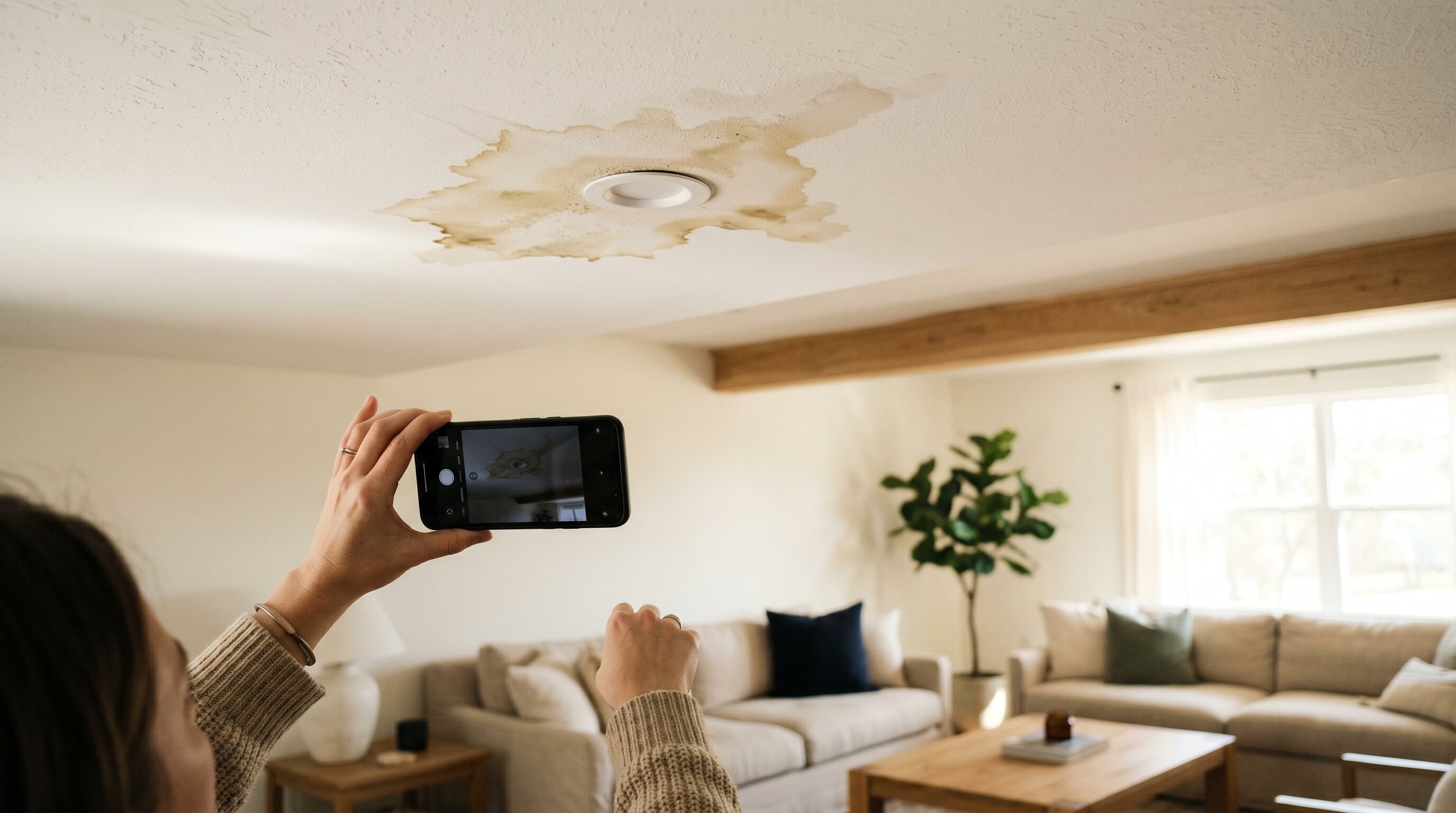
This is where an insurance agency earns its keep, so listen to this part. Before you clean up, photograph and video everything. Wide shots of each room, close-ups of the damage, the source if you can see it, and any damaged belongings.
Why it matters: your claim is only as strong as your evidence. Adjusters pay on what they can verify. The homeowner who spends ten minutes filming before they start mopping almost always has a smoother, larger settlement than the one who cleaned up first and tried to describe it later.
- Photograph serial numbers and labels on damaged appliances and electronics.
- Keep a running note of when it started and what you did, with timestamps.
- Don't throw anything away until it's documented — and ideally until your adjuster says it's okay. Pull damaged items out of the water, but set them aside, don't haul them to the curb.
Third: call us, and start the claim
Call your agent before you call anyone else — yes, before the restoration company. We can tell you in five minutes whether this is likely a covered claim, what your deductible looks like, and whether filing even makes sense (sometimes, for a small loss, it doesn't). That's a conversation you want before a 2 a.m. emergency-services bill, not after.
When you reach us, have ready: what happened, when, and the photos. We'll walk you through opening the claim and what the adjuster will need.
The fastest way to turn a covered loss into a denied one is to wait. Most policies require "prompt" notice — call the same day.
Fourth: stop the damage from getting worse
Your policy expects you to prevent further damage — it's called your duty to mitigate, and it's in every homeowners contract. You don't have to do the full restoration yourself, but you do have to stop the bleeding:
- Get standing water out — wet/dry vac, mops, towels.
- Move furniture and rugs off wet flooring; put foil or wood blocks under furniture legs.
- Get air moving: fans, a dehumidifier, open windows if the weather's dry.
- In our climate, mold can start in 24–48 hours. Drying fast isn't cosmetic — it's the difference between drying a room and tearing it out.
Keep the receipts for anything you buy to mitigate — fans, a wet/dry vac, a tarp. Those are often reimbursable.
What's usually covered — and the big exception
Here's the part Seguin homeowners get surprised by most. In general terms:
- Sudden and accidental water damage — a burst pipe, a failed water heater, a supply line that lets go — is typically covered by a standard homeowners policy.
- Gradual leaks and lack of maintenance — the drip under the sink you knew about for a year — typically are not. Insurers cover accidents, not deferred upkeep.
- Flooding — rising water from outside, storm surge, a creek over its banks — is not covered by homeowners at all. That requires a separate flood policy (through the National Flood Insurance Program or a private market). If you're near the Guadalupe or in a low spot, this is a conversation worth having before the next big rain.
- Sewer or drain backup usually needs its own endorsement added to the policy.
That's the general shape of it — your actual coverage depends on your policy and endorsements, which is exactly the kind of thing we'd rather you ask us about on a calm Tuesday than discover on a bad one.
When to call a professional
For a small, clean-water spill you caught fast, you can often handle it yourself. Call a restoration pro when:
- The water sat for more than a day, or you can't tell how far it spread.
- It came up through a drain or from outside (contaminated water).
- It got into walls, cabinets, or under flooring where you can't dry it.
- You smell anything musty — that's mold, already started.
A good restoration company also documents moisture readings, which strengthens your claim.
Water damage is one of the most common home claims we see in Guadalupe County — and one of the most survivable, if you move in the right order. Safety, document, call, dry. In that sequence.
If you're staring at a wet floor right now, call us at (830) 379-7352 — we'll tell you what's covered and what to do next. And if you're reading this on a dry day, that's the smart time to check whether your policy covers what you think it does. Walk in, call, or ask us to review your coverage.
Have questions about how this applies to your coverage? Walk in, call, or start a quote — we'll shop 30+ carriers.